
A four-round head-to-head (pricing, free features, hosting and extras, interface) that walks through first-year vs renewal .com prices on both registrars and ends with a who-should-pick-which verdict.
A narrated overview comparing company background, feature lists, user experience, pricing, pros and cons, and other services of both registrars.
George Vlasyev · YouTube · Domains
 ▶ Watch on YouTube
The choice comes down to needs and budget: Porkbun for clear fair pricing, Namecheap if you want more services and accept higher renewals.
Keep your AI agent online 24/7 -- VPS from $21.99/year
SponsorWant your product here? Sponsor a slot
A narrated overview comparing company background, feature lists, user experience, pricing, pros and cons, and other services of both registrars.
Changed since filming: Prices are outdated: as of Nov 10, 2026 tld.reviews lists Namecheap .com renewal at $18.48 (not ~$12.98) and Porkbun .com at $11.81 for registration and renewal (not $8.56).
For most developers Porkbun is the better long-term home: its listed renewals are lower on all four TLDs checked (.com $11.81 vs $19.98) and its JSON API, sandbox and scoped keys are available to any account. Namecheap wins only on some first-year promos (e.g. .dev at $7.48) and offers 24/7 support, but its API is gated behind 20 domains or $50 in balance/spend and uses XML.
| Factor | Porkbun | Namecheap |
|---|---|---|
| .com renewal (1 yr) | $11.81 | $19.98 |
| .com first year | $11.81 | $12.08 (sale; $6.48 new-customer code) |
| .dev first year / renewal | $8.75 / $12.87 | $7.48 / $20.98 |
| .io first year / renewal | $20.91 / $51.80 | $29.98 / $75.98 |
| .ai per year (2-yr minimum) | $82.70 reg / $82.70 renew | $89.98 reg / $114.98 renew |
| WHOIS privacy | Free | Free for life (eligible TLDs) |
| API access | Any account; REST/JSON, sandbox, MCP | Requires 20 domains, $50 balance or $50 spent in 2 yrs; XML |
| DNSSEC | One-click on Porkbun DNS | On eligible domains with Basic or Premium DNS |
| 2FA | 2FA and WebAuthn | TOTP and U2F hardware keys |
| Support hours | Phone/chat 9am-5pm PT daily; email 24/7 | 24/7 support (live chat, tickets) |
A four-round head-to-head (pricing, free features, hosting and extras, interface) that walks through first-year vs renewal .com prices on both registrars and ends with a who-should-pick-which verdict.

A category-by-category scored comparison of price and renewals, security and privacy, features, support, user experience, and ecosystem and scalability.

For the cheapest possible VPS or many short-lived VMs, Vultr starts lower ($2.50 IPv6-only, $3.50 with IPv4, $5 for 1 GB) and its dedicated-vCPU plans start at $28/mo vs $42. DigitalOcean is priced close at most shared tiers ($6 for 1 GB, $24 for 2 vCPU / 4 GB) and is the better fit if you want its managed platform (App Platform, Functions), $5 object storage and a published 99.99% Droplet SLA.

For static sites and commercial side projects on a $0 budget, Cloudflare is the safer pick: static asset requests are free and unlimited, and the free plan carries no non-commercial clause in the docs we read. Choose Vercel if you build Next.js apps and want long-running Node functions, preview tooling and team features, but budget for Pro ($20/mo per developer seat), because Hobby is limited to personal or non-commercial use. New Cloudflare projects should start on Workers with static assets rather than Pages, since Cloudflare's docs point Pages users to a migration guide and Workers has the broader feature set.
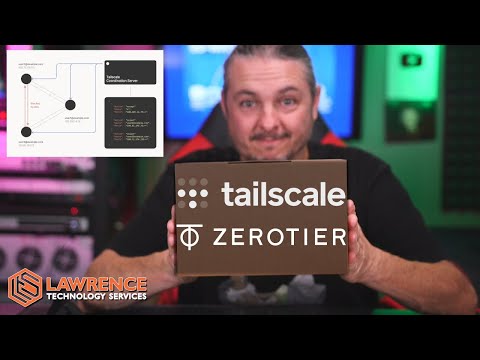
For most developers and small teams, Tailscale is the easier default: its free Personal plan allows 6 users with unlimited user devices, and an open-source (BSD-3) self-hosted control server, Headscale, exists. Pick ZeroTier when you need virtual Layer 2 (Ethernet) networking, or when your team has many users but few devices, since ZeroTier bills per device ($18/mo covers 10) while Tailscale bills per user ($8/user/mo).

If your priority is running VMs for free or pushing lots of bandwidth cheaply, OCI wins clearly: its Always Free tier includes 2 Arm OCPUs/12 GB RAM, 200 GB block storage and 10 TB/month of outbound data, and egress beyond that is $0.0085/GB from NA/EU. Pick Google Cloud if you want serverless (Cloud Run), the most polished managed Kubernetes, BigQuery, or first-party Gemini models, and accept that internet egress is billed at roughly $0.08-$0.12/GiB on the default tier.
Summary written by AIHOW.DEV from the video's transcript; the creator's views are their own. Current prices come from vendor pages, see sources.